Preserving and Accessing the Records of the Gunpowder Watershed of Maryland and Pennsylvania
Edward C. Papenfuse, Archivist of Maryland (Retired)
With apologies to Samuel Taylor Coleridge and the Rhyme of the Ancient Mariner, the title of this essay on preserving and making accessible the sources of history was chosen because the history of the Gunpowder watershed is both a triumph of the reversal of human degradation of the environment, and a cautionary tale about the failure of humans both to sustain the accomplishment and to care for the records that document its story for the instruction and enlightenment of future generations.
I. The Triumph:
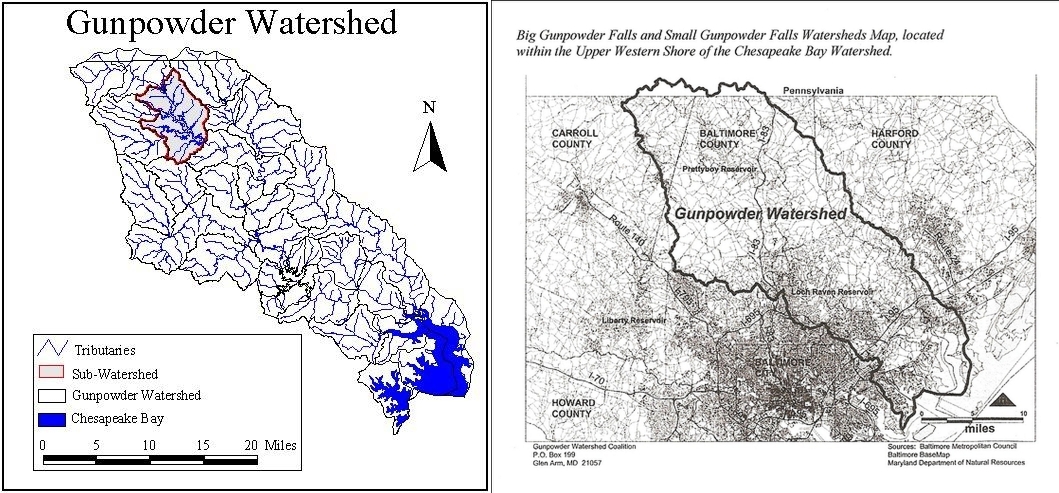
Baltimore City’s effort to acquire a sustainable water supply between 1830 and the 1950s led to the rehabilitation of a watershed that had become developed and polluted. With paper mills (the Hoffman Mills), manufacturing (Warren) and Iron mines (Ridgley Iron Works), not to mention agricultural runoff and quarrying, the water of the gunpowder was suspect as a source of water for the city, its people, and to a lesser extent, its industry. Over the course of about 150 years, using eminent domain powers acquired by 1908 and bond money authorized by the Maryland legislature, a considerable portion of the lands of the watershed along the river were acquired by the city and turned back to nature. It was a triumph of the public good for the welfare of the majority.
II. The History:
A) Who are its keepers?
There have been a number of people over the years who have been responsible for altering the course of the history of the Gunpowder watershed and promoting the keeping of its history. I will only mention a few:
1) Thomas H. Buckler
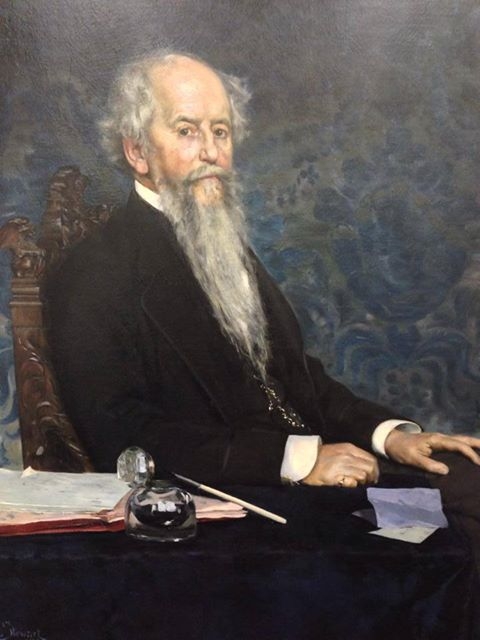
Thomas H Buckler is best known for his acid tongue when it came to the slowness
with which Baltimore addressed its health problems. Writing from the
comfort of a European Spa, possibly paid for in part from income from
the Gunpowder lands of his wife’s estate (she was a Ridgely), he opined
that the best solution to the contamination problems of Baltimore harbor
were to level Federal Hill into the basin, filling it up. He may have
had another ulterior motive than public health as well. Federal Hill
was the symbol of Union occupation of the city with its canons trained
on the populace to keep order (they are still there today), Buckler was
an ardent supporter of the South and fled to Europe to avoid the war.
Except for Nancy Shead’s biographical work on Buckler as a physician, there is no readily accessible biography of him. Yet , he more than anyone person was responsible for both advocating the Gunpowder as a source of water for the city and advancing the public health reasons why pure water was necessary for public health. He began his advocacy as physician at the Baltimore County alms house before the Civil War. As late as 1885 the first daily newspaper in California, the Daily Alta, sang his praises:
THE CHOLERA.
In recent conversations Dr. Thomas H. Buckler cf Baltimore, has had considerable to say in regard to the prevention of cholera. Most of what follows was said in particular reference to the City of Baltimore, but applies to all intents and purposes equally well to the City of San Francisco. Of the cholera epidemic he says "In 1832 when the population did not exceed 90,000, the number of deaths reported from epidemic cholera was 853. In May and June, 1849, preceding the edvest of cholera, an epidemic typhus made its appearance among the free negroes of the city. It was confined almost exclusively to this race, only two cases having been noted in whites. In rows of houses occupied by Germans, Irish and free blacks, it would invariably single out the latter, in many instances seizing an entire family. It came alike from all sections of the city, and invariably from filthy and unwholesome localities. This disease was highly infectious in character, and in its pathological lesions corresponded in almost every essential particular with yellow fever which occurred at Gibraltar, and is described by Louis. Many of these cases were taken to the Almshouse and a large number to the old smallpox hospital, fitted up for the purpose." After describing the old Almshouse, where the cholera epidemic of 1849 occurred, the topography of the surrounding country, (the western outskirts of the city,) the hygienic conditions of the Almshouse, which he said "seemed to be, of all other places, the field, not only for the spontaneous origin, but also for the growth and spread of disease," and the inefficiency of existing systems of quarantine, Dr. Buckler states that during the prevalence of the epidemic typhus before referred to as occurring among the free blacks of the city in June, 1849, eighty-three cases in all were sent to the Almshouse. Thirty-nine proved fatal. Of these all but one were colored people.
THE CITY WAS CLEANED UP.
Fearing that the typhus might become general, and in view of the fact that the city was threatened with an invasion of cholera, the physicians of the Almshouse, Drs. Buckler and Willis H. Baxley, gave notice to the public of the malignant character of the disease, and advised that the municipal regulations relating to cleanliness and public hygiene be rigidly enforced. In accordance with this recommendation all the lanes, alleys and byways were put in a thoroughly wholesome condition. The merchants had the wharves, then in a very filthy condition, cleansed and sprinkled with lime at their own expense. On the first of July the first case of cholera occurred at the Almshouse. It seems to have originated there, as did several other cases following in quick succession. In the meantime the Almshouse had been thoroughly cleansed. It was discovered by Dr. Buckler, however, that a cesspool had overflowed and was in a very filthy condition. Other sources of impurity were also discovered outside the north wall of the enclosure, and Dr. Buckler finally satisfied himself that a large space of ground "was one putrid and pestilential mass, capable of generating under the ardent rays of a midsummer sun the most poisonous and deadly exhalations.' Of the inmates of the Almshouse, 155 were attacked with cholera and 86 died. The proportion of deaths was much larger among the blacks than among the whites, a large number of the colored patients, however, had already been broken down by typhus. From the fact that while nearly one half of the male inmates were seized with cholera, more than four fifths of the opposite sex escaped, Dr. Buckler deduces the conclusion that this was precisely what might be expected if the malarial influence already alluded to exercised any control over the disease, for the men, having outdoor occupations, were most exposed to atmospheric influences. During the month of July, when the cholera prevailed, 76 persons eloped and 56 were discharged by the Board, most of whom went to the city to hide. In several instances they wera seized with cholera, and in this condition carried back to the Almshouse. These facts indicate that notwithstanding this constant and unrestricted intercourse, the disease confined itself to its favorite haunts. "It is fair to conclude." adds Dr. Buckler, *that but for the existence of the local impurities, cholera would never have visited the Almshouse." With the entire restoration of the establishment to a proper sanitary condition, the disease entirely ceased. The malaria acting probably as the strong predisposing cause of ill-health,”' says Dr. Buckler, *'exerted its influence by depressing the nervous system and lowering vitality, to as to interfere with a healthy performance of all the different functions. Thus predisposed, the inmates were rendered not only more susceptible to the imposition of morbid poisons, or to the action of any other exciting causes of disease, but at the same time their chances of recovery were greatly diminished, owing to the weakened state of their vital powers of resistance."
CLEANLINESS THE ONLY PREVENTIVE.
The appearance of epidemic cholera at the Almshouse gave a fresh impulse to the work of purification and induced a strict adherence to the sanitary measures previously adopted, so that all the avenues of the city were kept in the most perfect order. In accordance with Dr. Buckler's suggestion, committees of citizens were appointed in every ward to examine the premises connected with the various blocks of buildings and to see to the prompt removal of impurities. - The result was there were only four cases of cholera in the city, although it had been raging at the Almshouse. Mild cholerine, however, prevailed in almost every section of the city, showing that the cholera atmosphere pervaded this region. The conclusion, therefore, is inevitable that, to quote Dr. Buckler's words, " the immunity which Baltimore experienced in 1849 was owing entirely to the thorough purification which the city underwent in anticipation of the advent of cholera. Admitting the conclusion to be just, the inhabitants of Baltimore may enjoy the comfortable assurance that they have nothing to fear from future epidemics of this much-dreaded disease, provided they will see that judicious sanitary measures are properly carried out; but if they refuse to profit by their past experience, they must only expect to suffer a well-merited rebuke for their negligence." In other words, pure air, pure water and wholesome food, are the only conditions required to combat the disease. Baltimore's experience in 1849 has been the experience of communities all over the world. In .Europe the cities which have suffered most were in a filthy condition. At Naples and Toulon, where the epidemic raged most virulently, but little attention was paid to cleansing the streets. In Spain the disease has been prolonged because of the universal disregard of sanitary laws. Dr. Ferran, by inducing the people to believe that inoculation was an efficacious preventive, has done great harm by causing them to turn their attention- from the only real preventive — cleanliness. Dr. Koch's investigations have had a similar tendency. They have proved nothing, and on the other hand have encouraged persons to think that cholera can' be cured, and that sanitary precautions are comparatively useless. The germ theory of Koch is not a new thing, as it was partially investigated by Dr. Buckler and Dr. Christopher Johnson during the Almshouse epidemic in 1849,
VARIOUS CHOLERA THEORIES.
In his pamphlet under the heading "Theories Tested," Dr. Buckley says : "Before the removal of the nuisances (at the Alms House) the various cholera theories were tested as far as practicable. Saucers containing solutions of acetate of lead, nitrate of silver and other delicate re-agents were placed on the margin of the pond and at various other points back of the north wall, and numerous strips of chemically-pure paper wet with solutions of these salts were hung out at night over the different pools. Paper prepared with Sconbine'e solution of iodide of potassa and starch were also used to test the presence of ozone. Duplicate experiments were instituted in the city at the same time, but without any very satisfactory results in either of the trials, the changes which occurred being nearly alike at the two places.
"With a view of testing the cryptogamic and animalcular theories, plates of microscopic glass attached to threads by means of sealing-wax, were dipped in solutions of sugar, starch and gum acacia, and hung back of the north wall and in the cholera hospital. Other plates of glass were covered over with glycerine, remarkable for its property of remaining fluid for a long time .when exposed to the air, and these, like the former, were suspended in various places about the establishment. Sugar, and starch were selected because of the known tendency to vegetable germs to form on these compounds,and it was supposed if animalcula existed in the air, that some of these would of necessity be caught on the moist and tenacious glycerine. These. plates of glass having been thus treated, were carefully examined by Dr. Christopher Johnston, aided by powerful lenses, but he was unable to detect' the slightest trace of vegetable germe,animalcula or microscopic organisms of any sort.
NO CERTAIN CURE FOR CHOLERA.
The only true course, in Dr. Buckler's opinion, is to bend all energies to the prevention of the disease. When we get perfect sanitation, says Dr. Buckler, cholera will become a disease of the past. When there was universal ignorance and disregard of sanitary laws, and every city and town was a pig-sty, the black death, the plague and the sweating disease, which are now diseases of the past, ravaged many communities. Cholera will also become, like them, an obsolete disease if due regard is paid to sanitary laws. There is no certain cure for cholera, but it can be prevented, as was shown in Baltimore in 1849. Quarantine, Dr. Buckler thinks, is of no value if the city is in good sanitary condition. A number of cases might be brought here and they might die, but nobody would take the cholera. Dr. Buckler cays cholera is such a mysterious disease that it cannot be safely predicted whether it will or will not appear in this country next year. Baltimore, however, the Doctor stated, has nothing to fear if a rigid system of sanitation is enforced.
In view of the ravages of cholera abroad, the cleansing of the city cannot be begun too soon. Once cleaned, the city should be kept clean. As Dr. Buckler shows in his history of the almshouse epidemic in 1849, the thorough cleansing of the city of Baltimore in that year resulted in a marked decrease in zymotic diseases of all kinds, so that even if the cholera fails to come, any city will reap a sufficient return in the general benefit resulting from the scheme of the sanitation proposed.
2) John McGrain

John McGrain’s work on mollinography is internationally recognized (Louis Bergeron for example) and his career as a preservationist in Baltimore County is legendary. His most recent publication is on the history of Charles Street. His research on the Gunpowder is available on and off line at the Maryland State Archives and is indispensable for anyone interested in the mills and manufacturing in the gunpowder watershed..
3) Ron Parks

I strongly urge anyone interested in the history of Baltimore’s water supply to purchase Ron’s books, particularly this one which is a guide to all the good work he has done over the years to preserve the history of Baltimore’s water supply. Included is an extensive time line relating to efforts to acquire water for the city that is invaluable to the study of the Gunpowder watershed.
4) Teri L. Rising

Teri L. Rising
Historic Preservation Planner, Baltimore County Department of Planning
Over a hundred years ago, Baltimore City proposed building a dam that would bring water from the Gunpowder River to Baltimore City. While the reservoir would accomplish this goal, it would also destroy homes, communities, and create controversy between Baltimore City and County. As a historic planner and historian, I am often asked for the story behind Loch Raven reservoir. “History Underwater” is a brief summary of the project that would change the landscape of Baltimore County forever.
Baltimore City had long struggled to supply its citizens with clean water, but the increasing population caused natural sources to disappear and water contamination to increase. A drought in 1869 convinced city officials to look beyond the Jones Falls for sources of water and the Gunpowder River had been identified in 1853 as a possible choice.
“This matter of water supply cannot be overestimated in its importance, and when the water of the Gunpowder shall have been conducted into the city, as it must of necessity be in the lapse of a few years, no city on this continent or in Europe will be able to boast of so great a bounty.”Mayor of Baltimore - 1872
Construction began December 3, 1875 and the Loch Raven lower dam was completed by 1881. The works consisted of a dam, which formed the reservoir, a tunnel connecting the reservoir with Lake Montebello, and a conduit connecting Lake Montebello to Lake Clifton. That water tunnel is still used today. Officially named in 1877, “Loch Raven” was inspired by area landowner, Luke Raven, along with the addition of “Loch”, as Scottish for Lake. William Gilmor, owner of the "Glen Ellen" estate, has been credited as the source of the name.
A polluted Jones Falls convinced officials to expand Loch Raven by adding an upper dam. Knowing that Baltimore City was scouting for land, the Warren Company secretly sold the town to the city in 1908 for a confidential price. The City Council conducted an investigation and concluded the acquisition was inappropriate and price too high. Negative press coverage resulted in serious criticism for officials and the deal was nullified by the Court of Appeals in 1913.
After the upper dam was completed, the city implemented the next phase and raised the spillway to the 240 feet maximum. In response, nearly 50 square miles were annexed in 1918. The annexation consumed many farms and mills and forced residents to relocate. City inspectors assigned values to the properties and negotiated their acquisition. Many sites were demolished and flooded; others were partially demolished and left to deteriorate within the watershed’s boundaries. Those affected had names like Morgan’s Mill, "Furnace Farm", "Vauxhall", and "Glen Ellen".
Amidst lawsuits and accusations of impropriety, the last lands purchased for the final phase of the Loch Raven Reservoir included the towns of Warren and Phoenix. When they were finally condemned in 1922, it cost the City one million dollars. Spectators made the trek and documented the dismantling and demolition of the village making Warren’s demise the best known and documented.
If you are interested in learning more, or would like information about the sources I used for this blog, feel free to contact me at trising@baltimorecountymd.gov.
Further Reading
Keywords: baltimore city department of public works, baltimore county department of public works, baltimore county planning department, baltimore county utilities, gunpowder river, history of loch raven reservoir, loch raven dam, loch raven reservoir
5) Dr. Charles Stine
 .
.
.
and the mysterious
6) “Gargonzola”. Note that his article is about Warren and that some of the web sources he cites no longer exist.
All but Buckler and Stine have an easily findable presence on the web, but I will caution that that presence is not sustainable unless related to a permanent electronic archives maintained in perpetuity by public support. Already at least one very good website devoted to the history of the Gunpowder has disappeared into the ether (as Joseph Priestley might have referred to it).
B) Where are there untapped resources and who will make them available on line and in perpetuity?
When the AP history students of Western Technical School of Technology and Environmental Science in Catonsville produced their thoughtful and pioneering study of the history of the Baltimore Water Supply in 1999, their introduction pointed out the difficulty in finding the necessary sources to write the history of the communities that populated the watershed:
Finding proper primary sources was quite difficult. This information was
locked away and kept in places that were inaccessible to our needs. The use of maps were helpful throughout the process, however, at times the accuracy of the maps were suspect due to the map making techniques of the period studied.
What they did not know and had no easy way of finding out at the time was that, in addition to the work that Ron Parks had undertaken to preserve the Baltimore city records relating to the history of the water supply, there is an abundance of detailed and visual information about the efforts to acquire the watershed among the court records of the State.
Beginning in 1975, the Maryland State Archives began a program to save as much of the surviving court records in Maryland, particularly those relating to land ownership, as possible. For the purposes of exploring the history of the Gunpowder watershed, there are many examples, three of which have been placed on line as part of the virtual collection at the Maryland State Archives devoted to documenting and expanding the efforts of Ron Parks to make the sources of the history of the Baltimore City water supply accessible and permanently preserved.
I will begin first with a volume preserved by Ron Parks, the companion of which disappeared before he began his efforts to collect the surviving record:
To understand the process by which Baltimore city acquired the water rights to the Gunpowder watershed and the State came to establish parkland along it, the court records provide an unparalleled window of observation and analysis.

1) THE MAYOR AND CITY COUNCIL OF BALTIMORE vs. THE WARREN MANUFACTURING COMPANY, and SUMMERFIELD BALDWIN., 59 Md. 96 (1882)BALTIMORE COUNTY CIRCUIT COURT (Equity Docket) Volume 8 Page 164 [MSA C 326-8, 2/49/8/7]
2) Warren Manufacturing Company of Baltimore County v. The Mayor & City Council of Baltimore et al., 119 Md. 188, 1911-1912BALTIMORE CITY CIRCUIT COURT (Equity Docket, Index) 1853-1982, MAV-MEN [MSA CM 1295-20, CR 69,129]BALTIMORE CITY CIRCUIT COURT (Equity Docket A, Miscellaneous) Volume 51A pp. 322, 445, 452 and 459 [MSA T 55-51, 3/4/1/34]BALTIMORE CITY CIRCUIT COURT (Equity Papers A, Miscellaneous) Boxes 2813 & 2814 Case No. A6166 [MSA T 53, 3/8/8/26 & 3/8/8/27]Bromley Atlas of Baltimore County, 1915, detail from plate 38 of Warren, Maryland on the Gunpowder River.
3 )William H. Hoffman v. Warren Mfg.62 Md. 162, 1884Trial Court RecordsAppellate Court RecordsScanned as msaref 5458-51-4035
4) Acquisition of Hoffman Property by Baltimore City2 July 1901:Hoffman lands sold to Rockdale Powder Co.BA Land Records, MBM 245, p. 476-488; Carroll Land Records JHB 93, p. 266-285 (note that both deeds are the same).Land sold for $100,000. 7 tracts of land, totaling 1160 acres.30 December 1924:Rockdale sold lands to Title Guarantee & Trust Co.BA Land Records 605, p. 216-231 [CE62-506]; Carroll Land Records WMM 144, p. 505-514 [CE56-132] (note that both deeds are the same).7 tracts of land, totaling 1160 acres. Sold for $5.00 and "other valuable considerations."14 January 1925 Title Guarantee & Trust Co. sold land to Mayor & City Council, 14 January 1925The city bought the land for $5.00 and "other valuable considerations" (i.e. a player to be named later). Land purchased for the construction of Prettyboy Dam.Hoffman & Sons owned Gunpowder, Clipper, Rockdale, and Hoffman (at Silver Run) paper mills. Not shown on the map is the Hoffman's Marble Vale mill, located on Paper Mill Road, near Cockeysville, which burned in 1888.Map from McGrain, From Pig Iron to Cotton Duck, p. 269.Secondary Sources:John W. McGrain, From Pig Iron to Cotton Duck: A History of Manufacturing Villages in Baltimore County, vol. 1, p. 274-279.Mary A. Seitz, The History of the Hoffman Paper Mills in Maryland, p. 51-53.
III. The Challenge:
A) sustaining the triumph
The only way that the success of preserving the Gunpowder watershed can be sustained is by the public realizing that the resources represented by the watershed (tree cover, naturally ‘clean’ water, etc) must be preserved from development and managed by public entitities paid for by tax dollars. I leave that discussion to others
B) keeping the memory of what transpired
If we don’t pay attention and allocate adequate resources to the care, preservation, and access of the memories of the past as represented in the surviving public and private records (including newspapers), much of the lessons of the Triumph will be lost and our understanding of the human experience on the land and its instructive power for the future will we lost. We will be condemned as George Santayana warned us, to repeat the sins of the past.
Those who cannot remember the past are condemned to repeat it. George Santayana


 [3]
[3]